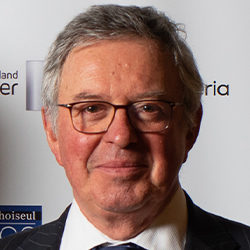
Jean-François DAGUZAN
Vice-President
In a new study, Jean-François Daguzan, Vice-President of the Institut Choiseul and specialist in strategic affairs, offers a contemporary reinterpretation of cultural influence strategies. He examines the profound transformations of a concept long considered stable — soft power — through the strategies adopted by several countries: the United States, South Korea, Algeria and India.
At a time when social networks, emotional dynamics and geopolitical tensions are reshaping the mechanisms of influence, the notion of cultural attraction has gained renewed relevance.
The world is no longer structured around a single model; it is traversed by competing narratives, shifting identities and hybrid strategies that combine culture, geoeconomics and technology.
To what extent are the United States — long the archetype of soft power — undergoing an internal transformation of their sources of influence?
Amid political polarisation, large-scale mobilisation on social networks and the continued dominance of a globalised cultural ecosystem, American attractiveness endures, though in more conflictual and less linear forms. It is no longer a uniform model but a field of competing forces that are exported almost unintentionally.
The South Korean example has, in just two decades, become one of the most structured expressions of contemporary soft power. Music, cinema, series, fashion, video games: Hallyu forms a coherent ecosystem supported by public policy, a strong industrial fabric and the international mobilisation of communities.
South Korea’s cultural influence now stands as both a vector of identity and an economic driver.
Another model emerges in the case of Algeria, where the cultural dimension follows a more reactive logic.
The study describes an intensive use of social networks, strong emotional charge and the mobilisation of national symbols that act as conduits for political dynamics. This is a hybrid form of soft power, situated more in the sphere of informational influence than in that of creative industries.
Finally, the analysis of India reveals an interplay between creative power — Bollywood, digital content, the diaspora — and identity assertion. The country combines international promotion, civilisational positioning and a desire to project a coherent national narrative.
This hybridisation fuels a soft power that is at once attractive, strategic and marked by internal tensions.
Through these trajectories, the study highlights the growing importance of cultural strategies now operating in a fragmented environment, saturated with weak signals and shaped by both state and non-state actors. Culture has become a battleground as well as a vector of identity, revealing how each nation adapts to contemporary forms of influence.
It calls for a rethinking of cultural policy, a deeper understanding of the role of national narratives in power, and the development of new response capacities — particularly in Europe — in the face of intensified digital and emotional influence dynamics.
Meet the personalities who contributed to this publication